
Solar & Home Storage
Done Right.
Your independent solar advisor.
About Us
Prime Solar Advisors is an independent solar advisory practice based in Los Angeles, serving homeowners mainly across Southern California.
We help families compare installers, understand financing, and choose the right agreement, so they end up with the right system, from the right people, and a smooth path to becoming energy independent.
What we offer
-
Comparing prices is the easy part. Comparing value takes expertise.
At no cost, we evaluate every top-rated local installer on pricing, equipment, contract terms, warranties, workmanship history, and long-term reliability to find the right fit for your home and your expectations. The details most homeowners don't know until something goes wrong.
Becoming energy independent should be simple, not a headache. We make sure it happens with the right people, on the right terms.

-
Confidential when it needs to be, NDA available on request. You have direct access to us, not a call center. We give you the facts and the time to decide, on your schedule. No gimmicks.
We stay involved through design, permitting, installation, and we'll stay available to connect you and the installer as long as needed. So if something's off, you have someone in your corner who already knows your project.
Why Solar, Why Now
Our Mission
California's grid is aging, and demand is only rising, electric vehicles, data centers, and a power grid straining to keep up. The result is simple: rates are going up, and outages are becoming more common.
Solar isn't a luxury anymore. It's how you turn something unpredictable into something you control.
Producing your own power doesn't just give you security, it adds real value to your home, and over time, the savings for some families can add up to real financial impact, while cutting your home's carbon footprint and making a positive impact on the environment
How It Works
For Homeowners & Their Trusted Advisors

Step 1 - Energy Assessment
Step 2 - Compare & Match
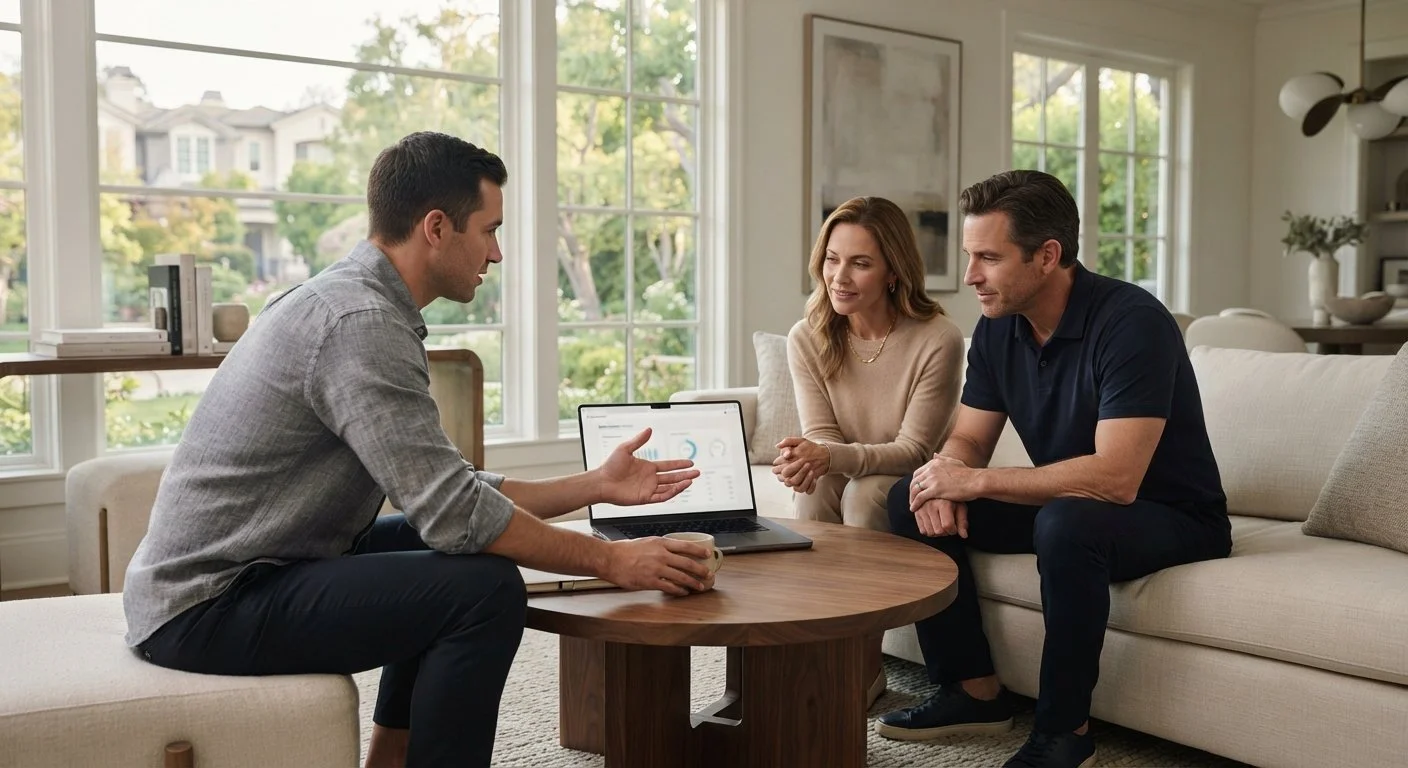
You (or your representative) get a clear, side-by-side breakdown of your options. We give you our honest recommendation. The decision, including which installer you choose, is always yours.
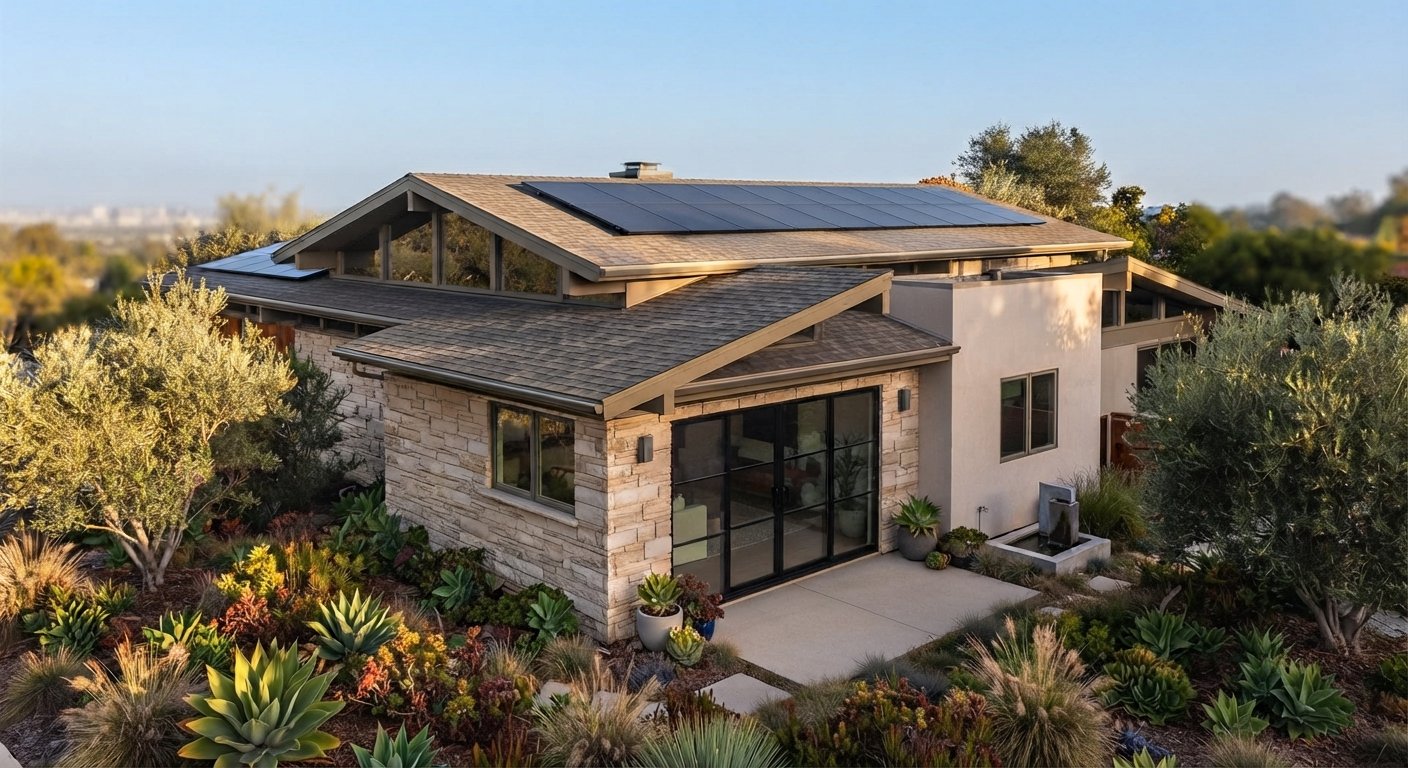
From site survey to permitting, installation, inspection, and permission to operate. We stay involved every step of the way.
We compare bids from top-rated local installers on equipment, pricing, contract, warranties and reputation. Then match the right financing: cash, prepaid lease, loan, lease, or PPA — to what actually fits your situation and goals.
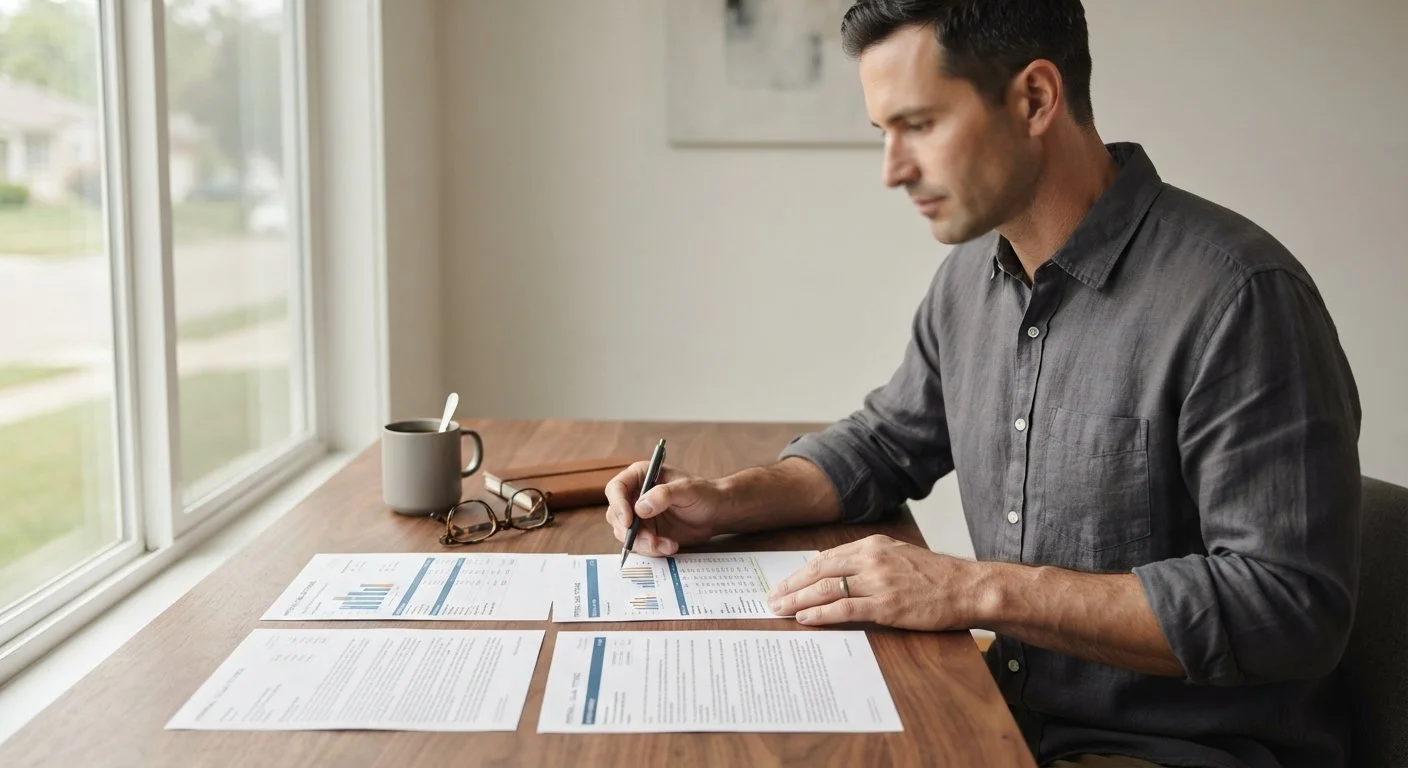
Every home is different. We start with a precise sun exposure analysis of your roof. Plus your exact power usage. That precision is what a proper system design is built on.
Step 4 - Full Project Oversight
Step 3 - Present & Guide

FAQ
-
We usually work with agreements that include a 25 to 30 year performance warranty, so you're covered long term.
We also only design systems with microinverters, never a single central inverter. That means each panel works independently. On systems with one central inverter, if one panel underperforms, it drag down the entire system. If a panel "stops working," it's usually just the microinverter that needs replacing, and those come with a 25 year warranty.
-
This is one of the biggest fears people have, and it happens more than it should in this industry. This is why we do our due diligence and work with local, top rated contractors with strong financials, not big nationwide companies carrying heavy debt with a shaky reputation and fast cash door to door sales operations.
The structure in your contract also matters a lot here, equipment warranty, labor warranty, and who actually backs them. This is exactly what we help you navigate, so you understand what you're signing and can compare bids the right way, not just on price.
-
With every agreement we bring you, cash, loan, lease, or PPA, no, there's never a lien on your home. That's not something we do.
But it's worth knowing: some companies do use financing (like a HELOC or PACE loan) that puts an actual lien on your house, meaning it could be at risk if you default. Most solar agreements only place a claim on the equipment itself, not your home, but not every company is upfront about which one you're signing.
-
Short answer: no. Solar panels do not cause leaks by default, poor mounting methods do. Every roof penetration is properly flashed and sealed by our contractors, who are used to high end quality work. A solar installation done right does not increase your roof's chance of leaking.
Most agreements also include a labor warranty, so if anything ever goes wrong with the installation itself, it's covered.
-
It can be common to hear bad stories about solar in some areas, and the truth is, the problem is never the solution of solar itself. The problem comes from shady installers and unethical door to door sales reps making false promises for a fast commission, putting people into bad deals they don't fully understand.
Sooner or later, every home in California with good sun exposure will go solar. That's exactly why Prime Solar Advisors exists. Becoming energy independent can have a real, lasting impact on your home and your finances, and everybody deserves that with exceptional service and full transparency, not pressure and empty promises.
Common Concerns:
-
Yes, absolutely. Discretion can be standard practice for the clients we work with.
-
Yes, absolutely. We can coordinate everything with a business manager, estate manager, family office, architect, or concierge throughout the entire project, without needing direct, ongoing contact with the homeowner themselves.
-
None of that. There are no unsolicited sales calls and no disruptive site visits without being scheduled and approved in advance. Everything is coordinated on your team's terms, quietly and professionally, with as little or as much involvement from household staff as you prefer.
For Representatives & Advisors:
Practical Questions:
-
Cash, loan, lease, prepaid lease (Cash or loan), or PPA. Depending on your future plans with your home, your goal with solar and your family's situation, one option can be a much better fit than another.
We do have our own opinion on the best way to go solar in general, but every situation is different. We help you make the right decision for you, but the decision is always yours.
-
Not the way it used to be. The 30% credit for buying with cash or a loan ended for good on December 31, 2025.
The commercial version of the credit, the one that applies to leases, PPAs, and prepaid leases, also came to an end for new projects on July 4, 2026. After that date, companies could no longer start fresh and qualify.
The only remaining path runs through companies that already secured what's called safe harbor equipment before that July 4th deadline. In simple terms, they had to lock in real equipment and real construction progress ahead of time, not just sign customers. So there is still a way to claim that 30% today, but only through companies that already secured that safe harbored equipment, and that pool is limited. It won't be there forever, and knowing which companies actually qualify versus which ones are just saying they do is exactly the kind of thing we check before recommending anyone.
(This is general information, not tax advice. We'd always recommend confirming specifics with a tax professional.)
-
Each situation is different, and it depends on your goals, your finances, and your home. That said, our general recommendation is that owning the equipment is usually the better path when it's possible.
One way to get there while still capturing the 30% tax credit is a prepaid lease, paid in cash or through a loan. With this option, you can move toward full ownership after 6 years, combining the benefit of the tax credit with eventually owning your system outright.
-
Not every home is. Bad sun exposure, heavy shading, or a roof in poor condition can all affect whether solar makes sense for you.
We'll always be the first ones to tell you if your home wouldn't get the best benefit from going solar.
-
It depends a lot on your city and utility. Installation itself usually takes 2 to 3 days.
The bigger variable is everything around it. Waiting on permits before installation can take anywhere from a week to 5 weeks. After installation and inspection, getting PTO (permission to operate) can take just a few days or over a month, depending on your utility and their schedule.
All in, from signing to your panels actually being on, the whole process can take anywhere from a month to 3 months.
-
It can be a problem if there's a lien on the home, which is exactly why we never offer contracts structured that way. Outside of that, payments, contracts, and warranties are all transferable to the next homeowner.
A recent study of over 5,000 California home sales found that owned solar panels sold for 5% to 10% more than comparable homes without solar, so going solar the right way can genuinely work in your favor when it's time to sell, not against you.
(One important note: this value boost mainly applies to owned systems, not leased or PPA ones, which is one more reason ownership structure matters and is worth talking through with us before you decide.)
-
We can never promise you'll never see a power bill again. Systems are usually designed well over 100% of what you currently use in kWh, but your usage can change over time, and you might end up using more than you do today.
What you actually pay after going solar depends a lot on your setup, whether you have battery storage or not, and your utility's current net metering rates.
We'll walk you through the best setup for your home, your goals, and your specific utility, so your system is designed to give you as much independence from the grid as possible.
-
If you have a battery, the extra power you produce during the day gets stored and used at night. If you don't have one, and your utility still offers 1:1 net metering, you build credit by sending your extra power to the grid during the day and use that credit at night instead.
Every utility handles this a little differently, and net metering rules have changed a lot recently. We'll walk you through exactly what this means for your home, your utility, and whether a battery makes sense for you.
Why Prime Solar Advisors:
-
Our opinion here can be biased, since we are advisors and we do compare bids for a living. But the reason we do things this way comes from experience. We've seen homeowners, and even representatives advising them, not really know how to approach going solar, even when they think they do.
Solar is not look complicated on the surface, but there's a lot happening behind a contract, a piece of equipment, or a financing structure that only someone who's been in the industry will actually catch.
Looking at just one installer, or trying to compare bids yourself using an AI chat, usually isn't enough. AI chats like Chatgpt, Claude, Grok, can be amazing tools, but only when it's used the right way, with real context about you, your home and proper prompt engineering to actually compare contracts correctly. We've seen homeowners make real mistakes relying on AI alone, and we can always recommend also checking with a tax professional and a lawyer for anything involving contracts or financing.
As for door to door sales reps, they usually represent one company. You don't get the option to compare. Most of them work for larger nationwide installers that often carry weaker customer service reputations, but pay much bigger commissions than local, high quality contractors do.
-
No. We give you the options and the guidance, and we're paid by whichever contractor you decide to go with, at the rate that contractor already builds into their pricing for the job.
We don't steer you toward whoever pays us the most or has the lowest redlines. If we did, we'd only be recommending the biggest companies out there.
-
Not at all. You're always free to make whatever decision you believe is best for you.
We're also happy to give advice on quotes you've already received, even from an installer we don't personally work with.
Ready for Solar Done Right?
Whether you're ready to compare your options or just want to ask a few questions first, we are easy to reach.